
What Size Dumpster Do I Need? A Snellville Guide
The single biggest sizing mistake is ordering by volume when the real limit is weight. Here's how to get it right for a Gwinnett project.
In this guide
- Weight versus volume
- The 10 yard: heavy debris and red clay
- The 15 and 20 yard: the everyday sizes
- The 30 and 40 yard: big volume
- How local material changes the answer
Ask what size dumpster you need and most guides give you a chart of dimensions. Useful, up to a point - but the number that actually decides is weight, not volume, and around Snellville the local material makes that especially true. Here's how we size jobs for real.
Weight versus volume
Every container has two limits: how much it holds and how much it can legally carry on the truck. For light, bulky debris - furniture, packaging, general clutter - you run out of space first, so volume decides. For dense debris - concrete, tile, clay, shingles - you hit the weight limit first, often while the box looks half empty.
Getting this wrong is the most common and most expensive mistake. Order a big container for heavy debris and you'll hit the weight allowance before it's full, paying for space you can't use. The honest answer is often a smaller container filled properly.
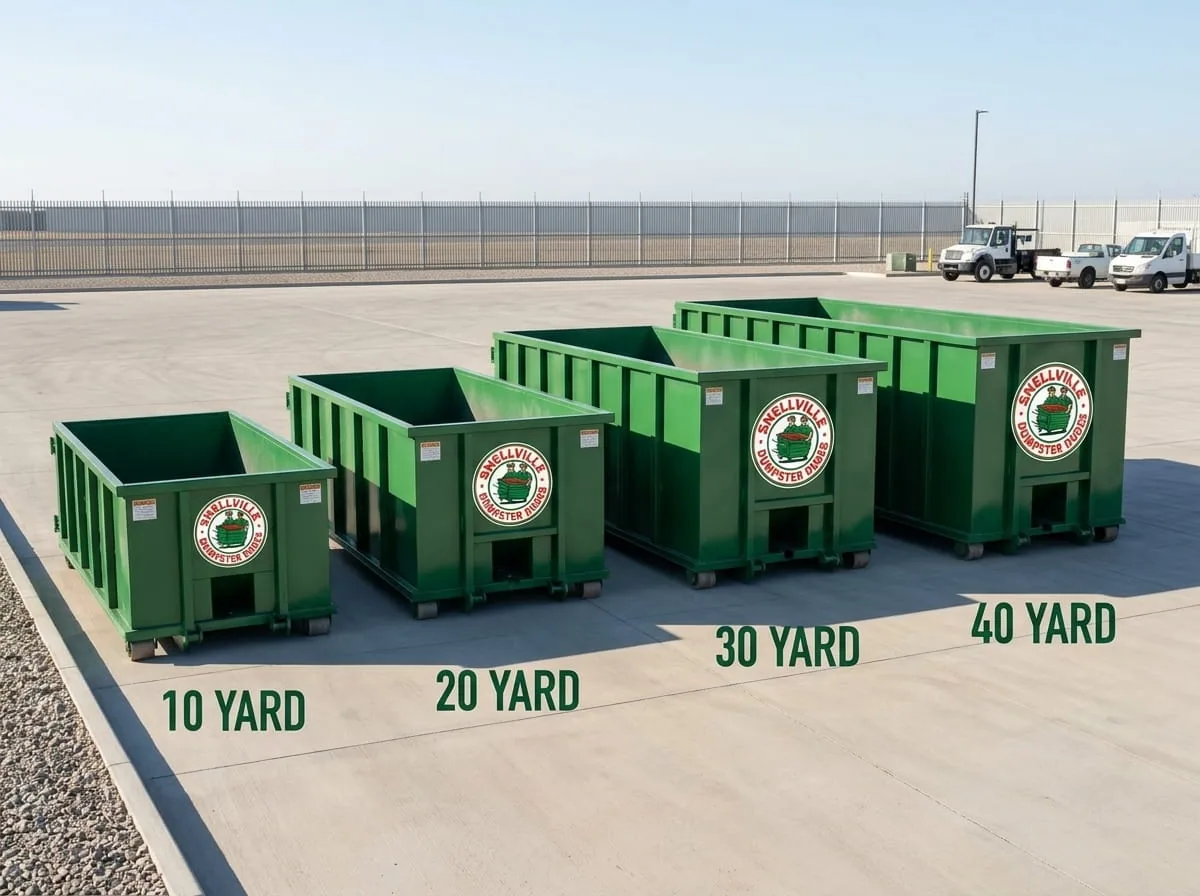
The 10 yard: heavy debris and red clay
The 10 yard is the heavy specialist. Concrete runs to roughly two tons per cubic yard, so a 10 yard filled level with it is already at the truck's legal road weight. It's the container for driveway and patio tear-outs, small tiled bathroom demolitions and masonry.
Around Snellville it's also the red-clay container. Georgia Piedmont clay is dense and holds water, so any excavation or footing spoil belongs in its own 10 yard rather than mixed into general debris where it maxes out the weight while the box looks half full. Let it dry first if you can.
The 15 and 20 yard: the everyday sizes
The 15 and 20 yard cover most residential jobs. The 20 is the popular all-rounder for multi-room remodels, big cleanouts and roof tear-offs. The 15 is the one we often recommend instead for dense remodel debris - plaster, tile, layered flooring from the county's older homes - because you'd hit the weight limit in a 20 before filling it.
For a roof tear-off, either can work depending on the squares and layers, but remember shingles are dense: a 20 yard can reach its weight looking half empty. That's normal, and it's why we size roofing by the squares rather than by eye.
The 30 and 40 yard: big volume
The 30 yard is the whole-house-cleanout and new-construction container: bulky, lighter debris in quantity. A furnished home generally fits one 30. The 40 is the largest, for major construction, commercial fit-outs and large-scale land clearing - pure volume jobs.
Both are volume containers, so heavy material never goes in them. Concrete or clay in a 40 would blow past the legal weight before filling it. And both need real space - a long, firm approach and overhead clearance - which on a tight or wooded Gwinnett lot can be the deciding factor.
How local material changes the answer
The Snellville-specific lesson is that our local heavy materials - red clay and masonry - push you toward smaller, dedicated containers, while the bulky vegetative debris from wooded lots and the light debris of new subdivision construction push you toward the big ones. The job's material, not its floor area, decides.
When you call, tell us what the debris actually is - not just the room count. A bathroom gut, a deck teardown and a garage clearance of the same size need three different containers. We size by material, and we'd rather get it right than upsell you a box you can't fill. Reach us on (770) 746-7062.
Book a container in Snellville
One flat rate covering delivery, seven days, pickup and disposal.
(770) 746-7062Questions readers ask about this
What's the most common dumpster size?
The 20 yard is the most requested and suits most general household projects. But for dense debris we often recommend the 15 yard instead, since you'd reach the weight limit in a 20 before filling it.
What size do I need for concrete or red clay?
A 10 yard. Heavy material like concrete and Georgia red clay reaches the truck's legal weight limit at about the point a 10 yard is full, so a larger container couldn't legally be moved once loaded.
What size for a whole-house cleanout?
Usually a 30 yard. Household contents are bulky rather than dense, so a fully furnished home generally fits one 30 without any weight concern.
How do I size a roof tear-off?
By the squares and layers, not by eye. A single-layer tear-off on an average home often suits a 15 or 20 yard filled to weight, since shingles are dense and hit the limit before filling the volume.